
A well-structured risk assessment is essential for maintaining safety across any construction site. Every construction risk assessment should identify hazards, evaluate the risks involved and define control measures to protect workers, contractors and members of the public.
A clear risk assessment for construction helps reduce risks, prevent incidents and ensure compliance with health and safety regulations. Many organisations now support this process using risk assessment software to standardise documentation and improve consistency across construction projects.
What is a construction risk assessment?
A construction risk assessment is a formal assessment used to identify hazards, assess risk level and implement appropriate control measures. It ensures that all potential hazards are recognised and managed before work begins.
This type of assessment identifies hazards, considers who might be harmed and ensures that actions to control the risks are clearly defined. A solid risk assessment is a legal requirement under UK law and forms a core part of managing health and safety on construction sites.
Legal requirements for risk assessment in construction
Under UK law, employers have a legal duty to carry out a suitable risk assessment for construction work. The Management of Health and Safety at Work Regulations and CDM Regulations require employers to:
- Identify hazards and assess risk
- Protect construction workers and others who could be harmed
- Record significant findings where required
- Review assessments following any significant change
This legal requirement applies to principal contractors and all construction projects. It also includes risks to members of the public and visitors who may be affected by construction work.
The risk assessment process (five step process)
The risk assessment process includes five steps:
- Identify hazards present on the construction site
- Decide who might be harmed and how
- Evaluate the risks and determine the risk rating
- Record findings documenting significant findings
- Review and update based on site conditions or new equipment
When assessing risk, it is important to involve workers, as site workers understand the risks involved and real site conditions. This helps ensure effective risk assessments.
Common construction hazards
Every construction site contains a wide range of hazard types. Common construction hazards include:
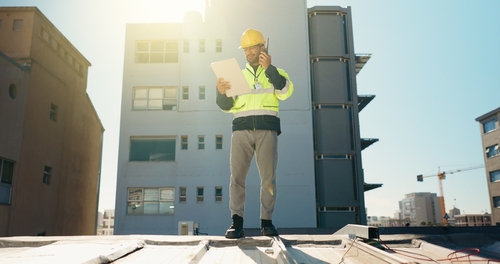
- Working at height and falling objects
- Moving vehicles and heavy machinery
- Manual handling and lifting heavy materials
- Exposure to hazardous substances
- Poor site conditions leading to slips and trips
These hazards could be harmful to construction workers, contractors and members of the public. A construction risk assessment identifies hazards early so that appropriate control measures can reduce risks effectively.
Risk assessment examples in construction
Below are practical risk assessment examples in construction showing how a construction risk assessment might be structured on a real construction site.
Example 1: working at height
Hazard: Falling objects and falls from height
Who might be harmed: Site workers, roofers, scaffolders, visitors members
Risk level: High
Existing control measures:
- Edge protection installed
- Safety harnesses used
- Scaffolding inspected
Further actions:
- Introduce permit systems
- Increase supervision
Residual risk: Medium
Falls remain one of the most significant hazards in construction risk assessments and require strict safety controls.
Example 2: manual handling
Hazard: Lifting heavy materials
Who might be harmed: Construction workers
Risk level: Medium
Existing control measures:
- Manual handling training
- Mechanical aids
Further controls:
- Reduce load sizes
- Improve techniques
Residual risk: Low
Manual handling is a common construction risk that must be assessed regularly.
Example 3: moving vehicles and plant
Hazard: Moving vehicles and heavy machinery
Who might be harmed: Site workers and members of the public
Risk level: High
Existing control measures:
- Defined traffic routes
- Banksmen present
Further actions:
- Improve signage
- Restrict access
Residual risk: Medium
Traffic management plans are essential when managing risks involving moving vehicles on a construction site.
Example 4: hazardous substances
Hazard: Exposure to hazardous substances such as dust and chemicals
Who might be harmed: Construction workers
Risk level: Medium
Existing control measures:
- Personal protective equipment
- COSHH controls
Further actions:
- Improve ventilation
- Monitor exposure
Residual risk: Low
Hazardous substances must always be considered in construction risk assessments.
Construction risk assessment template
A construction risk assessment template ensures consistency across construction projects. A typical risk assessment template includes:
- Hazard
- Who might be harmed
- Existing control measures
- Additional control measures
- Risk level and risk rating
- Further actions required
- Assessment date
- Review date
Using tools like risk assessment and method statement (RAMS) software allows businesses to align method statements with risk assessment documentation and improve risk management.
Managing risks on construction sites
Managing risks requires continuous monitoring. A risk assessment needed at the start of a project must be updated when:
- Site conditions change
- New equipment is introduced
- Construction work phases change
Dynamic risk assessments are often used to assess risk in real time where conditions shift.
Construction site risk assessments can include working at height, electrical safety and fire safety. Using systems like fire risk assessment software helps improve compliance and ensures accurate documentation across construction projects.
Reducing risk and improving safety
The goal of any construction risk assessment is to reduce risks to an acceptable level. This is achieved by:
- Implementing appropriate control measures
- Monitoring residual risk
- Following safety regulations
- Applying good practice
Strong risk management reduces project delays and improves overall safety outcomes. Many organisations adopt safety management software to centralise safety processes and maintain control across sites.
Conclusion
A well-executed construction risk assessment is essential for managing risk, protecting workers and meeting legal requirements. By identifying hazards, evaluating risks and applying effective control measures, businesses can maintain safe construction sites.
FAQs
What are the legal requirements for risk assessments in construction?
In Britain, employers must carry out suitable and sufficient risk assessments as required by the Management of Health and Safety at Work Regulations 1999 and the Construction (Design and Management) Regulations 2015. This legal duty applies to all construction work and includes protecting workers, subcontractors and members of the public who could be harmed.
Do risk assessments need to be recorded?
Employers with five or more employees must record the significant findings of their risk assessment. However, it is considered good practice for all construction risk assessments to be documented regardless of company size.
What should a construction risk assessment include?
A construction risk assessment should be recorded in a structured format, typically including:
- The hazard
- Who might be harmed and how
- The existing control measures
- Additional control measures or further actions
- Risk level or risk rating
- The responsible person
- The assessment date and review date
This format ensures findings documentation is clear and supports compliance with health and safety regulations.
What is the five step process for risk assessments?
The risk assessment process in construction follows a five step process:
- Identify hazards
- Decide who might be harmed and how
- Evaluate the risks and decide on control measures
- Record significant findings
- Review and update regularly
This process ensures effective risk assessments and helps control risks across construction projects.
How are hazards identified on a construction site?
Identifying hazards involves walking the construction site, reviewing tasks and assessing site conditions. This ensures that all potential hazards are recognised, including those not immediately visible.
How often should risk assessments be reviewed?
Risk assessments must be reviewed regularly to remain effective. This is especially important when there is a significant change such as:
- New equipment introduced
- Changes in site conditions
- Different phases of construction work
Regular reviews ensure risks remain controlled and relevant.
What are common construction hazards?
Common construction hazards include:
- Working at height and falls
- Falling objects
- Moving vehicles and plant
- Manual handling and lifting heavy materials
- Hazardous substances such as dust and chemicals
- Slips, trips and poor site conditions
Construction remains one of the highest-risk industries, with falls from height being a leading cause of serious injury.
What is a construction risk assessment example?
A construction risk assessment example might include working at height where workers could suffer serious injury from falls due to unprotected edges. In this case, existing control measures such as scaffolding inspections, edge protection and safety harnesses would be used, with additional control measures introduced to reduce risk.
What are existing and additional control measures?
Existing control measures are the safety steps already in place, such as PPE, training or barriers. Additional control measures are further actions required to reduce risk to an acceptable level.
What is residual risk?
Residual risk is the remaining risk level after control measures have been applied. The goal is to reduce risk to an acceptable level while maintaining safe working conditions.
What is a dynamic risk assessment?
A dynamic risk assessment is used to assess risk in real time when site conditions change or unexpected hazards appear. This is essential for managing risks during active construction work.
What is a qualitative risk assessment?
A qualitative risk assessment categorises risk level as high, medium or low, based on likelihood and severity. This helps prioritise actions and control measures.
What is a site-specific risk assessment?
A site-specific risk assessment is tailored to the exact construction site, taking into account site conditions, layout, workforce and activities.
What is a generic risk assessment?
A generic risk assessment applies to common construction tasks across multiple sites and can be adapted depending on the project.
What is Job Safety Analysis (JSA)?
Job Safety Analysis focuses on specific tasks and identifies hazards before work begins. It is used alongside risk assessments to improve safety during construction work.
Why are traffic management plans important?
Traffic management plans are essential for controlling moving vehicles and heavy machinery on a construction site. They help reduce risks of collisions between workers and vehicles.
Are there international standards for risk management?
Standards, such as ISO 31000, provide a framework for integrating risk management across all stages of construction projects, supporting better decision-making and safety outcomes.
Are specialised assessments required for high-risk activities?
Certain high-risk construction activities require specialised risk assessments to ensure compliance with safety regulations and protect workers.