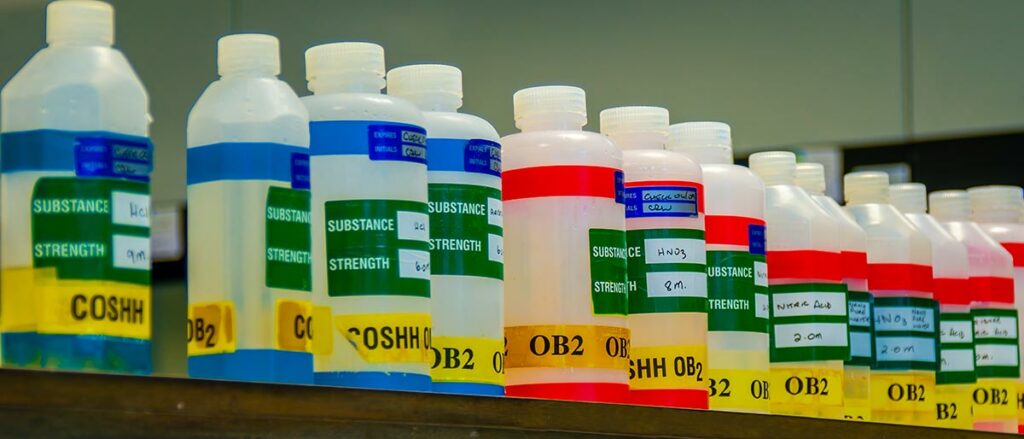


Workplaces across the UK handle a wide range of substances that are hazardous to health. From manufacturing chemicals to bacteria, exposure can lead to serious health risks, work-related ill health and accidents. The UK’s Control of Substances Hazardous to Health (COSHH) regulations provide a legal framework to help employers protect employees and maintain a safe working environment.
According to the Health and Safety Executive (HSE), exposure to hazardous substances contributes to thousands of new cases of work-related ill health each year. Understanding COSHH regulations is therefore essential not only for compliance with health regulations but also for the protection of your employees.
Digital solutions, such as Velappity, make it easier to manage COSHH assessments, implement suitable control measures and monitor workplace exposure. These tools help businesses stay on top of their responsibilities while protecting employees and maintaining safe working environments.
What COSHH stands for and why it matters
COSHH is a key set of UK health and safety regulations that requires employers to identify hazardous substances, assess risks, implement control measures and monitor employee health.
COSHH applies to many forms of hazardous substances in the workplace. These include chemicals, biological agents, dusts, fumes and vapours. Employers must protect employees from harm by controlling exposure, providing personal protective equipment (PPE) and carrying out health surveillance where necessary.
Employers are legally required to carry out COSHH risk assessments for all substances hazardous to health in their workplace. Using COSHH assessment software can help streamline this process by enabling digital tracking, automated reporting and secure record keeping. Failure to comply can result in legal penalties and increased health risks for employees.
Understanding substances hazardous to health
There are many substances that are hazardous to health, including:
- Chemicals, such as solvents, cleaning agents and paints
- Biological agents, like bacteria, viruses and bodily fluids
- Dusts and fibres, including silica, wood dust and flour dust
- Other substances, such as fumes, vapours and gases
Hazardous substances can cause a range of health problems. Exposure can lead to issues such as skin conditions, respiratory issues, disease or long-term work-related ill health. For example, handling bodily fluids without the necessary precautions puts healthcare workers at higher risk of infection.
There are some materials which also require strict control procedures, such as asbestos and radioactive substances, that are managed under their own specific regulations rather than COSHH. Employers must ensure they are aware of the appropriate legislation when managing any hazardous materials.
COSHH requires employers to assess both the health risks and the potential ways employees may be exposed. Risk assessments consider the frequency of exposure, the quantity of hazardous substances used and existing workplace control measures.
COSHH risk assessments and control measures
COSHH risk assessments are central to the control of substances hazardous to health. They involve:
- Identifying hazards – recognising the chemicals, biological agents and other dangerous substances in the workplace
- Assessing risks – evaluating who is at risk of exposure and how likely exposure could cause harm
- Implementing suitable control measures – including using safe systems of work, ventilation, containment and PPE
- Monitoring and reviewing – updating assessments as conditions change to ensure controls remain effective
Control measures aim to minimise exposure and prevent ill health. They can include engineering solutions like fume cupboards, administrative controls such as rotating tasks to reduce exposure, and PPE like gloves, masks and protective clothing. The use of health surveillance and regular health checks ensures employees working with hazardous substances are monitored for early signs of work-related ill health.
Personal protective equipment and health surveillance
PPE is a vital part of controlling hazardous substances. Gloves, masks, eye protection and protective clothing reduce the risk of exposure to substances hazardous to health. Employers must provide employees with suitable PPE and ensure they are trained in using it correctly.
Health surveillance is monitoring employees for adverse health effects caused by exposure to hazardous substances. This may include regular health checks, lung function tests or skin inspections. Health surveillance is required under COSHH for certain substances, particularly where there is a known risk of disease or work-related ill health.
The HSE emphasises that combining PPE with health surveillance and effective control measures creates the strongest protection against harmful substances in the workplace. Digital systems, including Velappity, simplify the creation and completion of risk assessments and maintaining the records, allowing businesses to respond quickly to potential health hazards.
Training, responsibilities and legal requirements
COSHH regulations place clear responsibilities on employers and employees.
The responsibilities of employers are to:
- Identify substances hazardous to health
- Carry out a COSHH assessment and document suitable control measures
- Provide training on safe handling and emergency procedures
- Supply appropriate PPE
- Monitor health through health surveillance and health checks
Employees also have responsibilities, which are to:
- Follow instructions
- Use PPE correctly
- Report any concerns about exposure or health conditions
Training is essential to ensure employees are aware of hazards, know how to assess risks and understand procedures in emergencies. COSHH training should be regular and updated whenever new substances or processes are introduced.
There are also specific regulations that cover many forms of hazardous substances. For example, Legionnaires disease has detailed requirements for control and monitoring. Employers must ensure compliance with health and safety legislation and provide further information to employees working with dangerous substances.
Health hazards and examples from different industries
Hazardous substances affect workplaces differently depending on the industry. Some examples include:
- Healthcare – employees may handle bodily fluids, biological agents or chemicals used in cleaning and sterilisation
- Construction – dust, fumes and chemicals such as solvents
- Manufacturing and laboratories – exposure to chemicals and fumes
To minimise health risks, workplace exposure limits are defined for many harmful substances. Regular monitoring and health checks allow early detection of work-related ill health, helping to ensure employees remain safe. Hazard symbols and warning signs help employees identify hazardous substances and understand the required precautions.
The table below provides an overview of some common hazardous substances covered by COSHH, with examples of their associated health risks and control measures to protect employees.
| Hazardous substance | Typical workplace exposure | Health hazards | Suitable control measures | Personal protective equipment | Health surveillance |
|---|---|---|---|---|---|
| Chemicals and solvents | Manufacturing, cleaning and laboratories | Skin irritation, respiratory issues and organ damage | Safe storage, ventilation, spill response plans and controlled use | Gloves, protective clothing and respirators | Skin checks and respiratory health monitoring |
| Biological agents (bacteria, viruses and bodily fluids) | Healthcare, laboratories and waste handling | Infection, disease and allergic reactions | Safe handling procedures, disinfection, hygiene procedures and containment | Gloves, masks and eye protection | Health checks and vaccination programmes |
| Fumes and vapours | Welding, painting and chemical processing | Breathing problems, dizziness and long-term lung conditions | Local exhaust ventilation, monitoring and safe working procedures | Respirators, gloves and eye protection | Respiratory health assessments |
| Dusts and fibres | Construction, woodworking, mining and food production | Respiratory illness, asthma and skin irritation | Dust extraction systems, wetting and work rotation | Masks and protective clothing | Lung function tests and regular health surveillance |
| Disinfectants and sanitisers | Healthcare, hospitality and cleaning operations | Skin or eye irritation and allergic reactions | Dilution control, ventilation and staff training | Gloves, aprons and goggles | Skin and eye health checks |
| Legionella bacteria | Water systems and cooling towers | Legionnaires disease | Temperature control, water treatment and risk assessment | Gloves and masks for maintenance tasks | Health checks for at-risk employees |
Alt text: table showing examples of hazardous substances, typical workplace exposure, health hazards, suitable control measures, personal protective equipment and health surveillance
Similar frameworks across the world
While COSHH applies in the UK, other countries have their own specific regulations for managing hazardous substances. For example:
- USA – the Occupational Safety and Health Administration (OSHA) manages workplace safety. Hazardous chemicals are regulated through Hazard Communication Standards, similar to COSHH risk assessments
- Canada – Workplace Hazardous Materials Information System (WHMIS) provides guidance on chemicals and training for employees
- Australia – Safe Work Australia regulates hazardous substances, requiring risk assessments, control measures and training
- New Zealand – Health and Safety at Work (Hazardous Substances) Regulations cover identification, control, and monitoring of hazardous chemicals and biological agents
- European Union – Registration, Evaluation, Authorisation and Restriction of Chemicals (REACH) and Classification, Labelling and Packaging (CLP) regulations set standards for chemical safety, hazard symbols and risk management, comparable to COSHH requirements
These frameworks focus on protecting employees, controlling exposure and preventing work-related ill health. Businesses operating internationally may need to integrate multiple systems to remain compliant.
Digital support for COSHH compliance
Managing hazardous substances, COSHH risk assessments and control measures can be complex. Using a digital solution such as Velappity can simplify this process.
With Velappity, risk assessments are completed on a mobile device, rather than a paper form which can be lost, damaged or filled out inconsistently. These digital forms are created in the easy to use Form Designer, meaning they are completely custom to meet your COSHH compliance requirements. New versions can also be created to reflect any required adjustments. Reports are then generated automatically upon completion of the inspection, meaning results can be reviewed by the client or internal party as soon as possible, to respond quickly to any identified issues. These reports are then stored in Velappity for centralised records of COSHH assessments, health checks and control measures. By automating processes, businesses can focus on reducing risks rather than managing paperwork.
Conclusion
Controlling hazardous substances is a key responsibility for employers. COSHH regulations provide a framework to identify hazards, assess risks, implement suitable control measures and monitor employee health.
Hazardous substances appear in many forms, from chemicals and biological agents to bodily fluids. As each poses unique health risks, they require careful assessment and ongoing monitoring. Employers can help prevent ill health, reduce accidents and protect their employees by understanding and implementing COSHH regulations.
Start a free trial to see how you can use Velappity to simplify the management of COSHH assessments, to protect employees by ensuring a safe working environment.