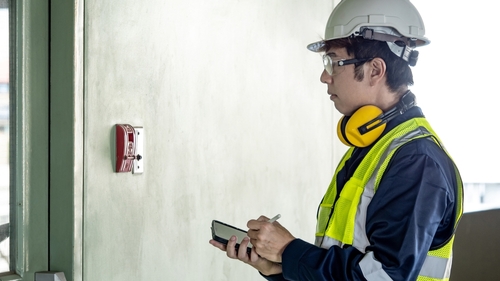


Understanding who is responsible for fire risk assessments is essential for any business, landlord or organisation operating in the UK. Fire safety legislation makes it a legal requirement to carry out a fire risk assessment and take action to reduce fire risk within any building or premises.
In simple terms, the duty falls to the responsible person – the individual who has control over the premises. This could be an employer, landlord, managing agent or business owner. Using structured systems like fire risk assessment software helps ensure assessments are carried out correctly, recorded properly and reviewed regularly to stay compliant.
What is a fire risk assessment?
A fire risk assessment is a structured process used to identify fire hazards, evaluate fire risk and implement measures to prevent fire and protect people.
Every fire risk assessment should:
- Identify fire hazards such as ignition sources and dangerous substances
- Identify people at risk, including employees and vulnerable people
- Evaluate risks and determine appropriate control measures
- Record findings in a written record where required
- Be regularly reviewed to reflect any significant changes
The goal is simple: reduce fire risk, ensure fire safety and keep people safe in any workplace, commercial premises or residential building.
Who is the responsible person?
The responsible person is the individual who is legally responsible for ensuring a fire risk assessment is carried out and that fire safety measures are in place.
In most cases, this includes:
- The employer in a workplace
- The landlord in rental properties
- A managing agent responsible for common areas
- The business owner or organisation controlling the premises
For multi occupied residential buildings, there may be more than one responsible person. For example, a landlord may be responsible for communal areas, while tenants or business owners are responsible for their own spaces. In these situations, cooperation is required to ensure fire safety across the entire building.
Legal responsibilities under UK fire safety law
Fire risk assessments are governed by the Regulatory Reform (Fire Safety) Order 2005, alongside updates introduced through the Fire Safety Act 2021.
Under this legislation, the responsible person is legally responsible for:
- Ensuring a suitable and sufficient fire risk assessment is carried out
- Identifying fire hazards and reducing fire risk
- Implementing fire safety measures such as fire detection and fire doors
- Maintaining emergency routes and escape routes
- Providing relevant training for employees
- Keeping a written record where required
- Regularly reviewing the fire risk assessment
Failure to meet these legal requirements can result in enforcement action from the local fire and rescue service, including fines or imprisonment.
When do you need a competent person?
A competent person is someone with the skills, knowledge and experience to carry out a fire risk assessment properly.
In smaller, low-risk premises, the responsible person may be able to carry out the assessment themselves using official guidance. However, for larger or more complex buildings such as high rise or commercial premises, it is strongly recommended to appoint a competent person.
This is particularly important when dealing with:
- External walls and structural risks
- Fire detection systems and exits fire detection setups
- Dangerous substances and safe storage requirements
- Complex escape routes and emergency routes
Bringing in a competent person ensures your fire risk assessment is thorough, accurate and compliant.
Fire risk assessment responsibilities by scenario
Employers and workplaces
In a workplace, the employer is responsible for ensuring fire safety. This includes carrying out risk assessments, identifying fire hazards and implementing control measures to protect employees and visitors.
Landlords and residential buildings
A landlord is responsible for fire safety in common parts such as communal areas, corridors and stairwells. This includes managing fire doors, flat entrance doors and escape routes.
Managing agents
A managing agent may take on responsibilities for maintaining fire safety systems, organising inspections and ensuring compliance across multi occupied residential buildings.
Commercial premises
In commercial premises, the person in control of the business is responsible for fire risk assessments. This includes ensuring employees receive training and that fire safety systems are maintained.
The fire risk assessment process
A proper fire risk assessment follows five key steps:
- Identify fire hazards within the building
- Identify people at risk, including vulnerable people
- Evaluate the risks and implement measures to reduce them
- Record findings in a written record
- Regularly review and update the assessment
Using a structured fire risk assessment template helps standardise this process and ensures nothing is missed.
How often should fire risk assessments be reviewed?
A fire risk assessment should be reviewed regularly to ensure it remains valid.
At a minimum, you should:
- Review annually
- Review after significant changes to the premises or building
- Review after changes to occupancy or use
- Review after a fire incident or near miss
Regular reviews helps ensure your organisation continues to identify fire hazards, manage risks and stay compliant with fire safety law.
Consequences of not carrying out a fire risk assessment
Failing to carry out a fire risk assessment can have serious consequences.
If the responsible person does not meet their duties:
- The local fire and rescue authority can issue enforcement notices
- A prohibition notice can prevent the use of a building
- Significant fines may be imposed
- In severe cases, imprisonment is possible
Beyond legal consequences, failing to manage fire risk puts people at serious risk and can lead to loss of life, damage to property and disruption to business operations.
How to stay compliant with fire safety regulations
To stay compliant, every organisation should:
- Carry out a suitable fire risk assessment
- Identify and reduce fire hazards
- Maintain fire detection systems and fire safety equipment
- Ensure emergency plan procedures are in place
- Provide training to employees
- Keep accurate records and documentation
- Regularly review and update risk assessments
Digital tools like fire safety software help streamline inspections, manage records, and ensure compliance checks are completed consistently across all premises.
Take control of your fire risk assessments
Managing fire risk is an ongoing responsibility. Whether you are a landlord, employer or managing agent, you must ensure fire risk assessments are carried out, recorded and reviewed regularly.
Velappity helps organisations stay compliant with custom structured digital inspection forms for compliance checks and reliable record keeping – even when working offline. This ensures your team can identify risks, take action quickly and maintain full visibility across your fire safety processes.
FAQs
Who is legally responsible for a fire risk assessment?
The responsible person is legally responsible. This can be an employer, landlord, managing agent or business owner depending on who controls the premises.
Can there be more than one responsible person?
There can be more than one responsible person. In multi occupied residential buildings or shared premises, multiple responsible persons may exist and must coordinate to ensure fire safety.
What is a competent person in fire risk assessments?
A competent person has the necessary skills, knowledge and experience to carry out a fire risk assessment correctly, especially in complex buildings.
Is a fire risk assessment a legal requirement?
It is a legal requirement under the Regulatory Reform (Fire Safety) Order 2005 to carry out and regularly review a fire risk assessment.
How often should fire risk assessments be reviewed?
They should be reviewed regularly, at least annually, or when significant changes occur within the building or premises.
What happens if you don’t comply with fire safety laws?
Failure to comply can result in enforcement notices, fines, prohibition orders or imprisonment, especially if people are put at risk.